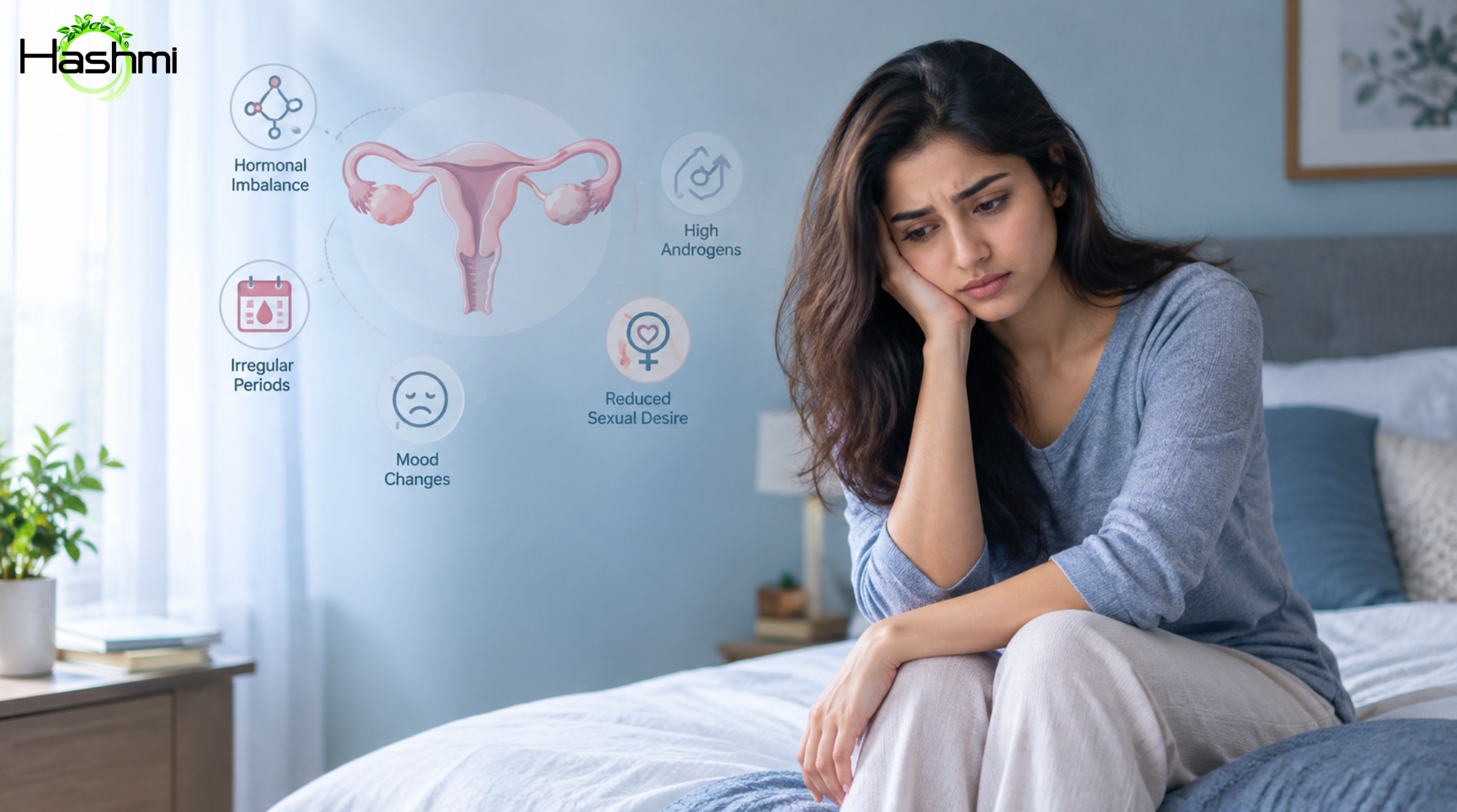
PCOS is often associated with irregular periods, fertility challenges, and weight gain. However, many women are surprised to learn that it can also affect intimate health, sexual well-being, and relationship satisfaction.
Polycystic Ovary Syndrome (PCOS) is one of the most common hormonal disorders affecting women of reproductive age, impacting an estimated 10–13% of women worldwide (World Health Organization). For many women, the condition affects much more than their menstrual cycle—it can influence confidence, emotional health, and intimate relationships.
What Is PCOS?
PCOS is a hormonal condition characterized by inclined androgen levels, irregular ovulation, and other metabolic and reproductive changes. Common symptoms include irregular periods, difficulty becoming pregnant, acne, excess facial or body hair, hair thinning, and weight gain. National Institute of Child Health & Human Development (NICHD)
How PCOS Can Affect Intimate Health
Hormonal Imbalances May Influence Sexual Desire
Sexual desire is influenced by a combination of hormonal, emotional, and physical factors. Since PCOS affects hormone levels, some women may notice changes in their interest in intimacy.
Hormonal imbalances linked with PCOS can affect sexual function and overall well-being. Office on Women’s Health (OWH).
Vaginal Dryness and Physical Discomfort
Hormones play an important role in maintaining vaginal health. Changes in hormone levels may contribute to reduced natural lubrication, leading to discomfort during intimacy for some women.
When intimacy becomes uncomfortable, it can affect both physical satisfaction and emotional connection within a relationship.
Body Image and Self-Confidence
Many women with PCOS experience symptoms such as acne, excess facial hair, weight gain, or thinning hair. These visible changes can sometimes affect self-esteem and confidence.
Research has shown that women with PCOS may experience challenges related to body image and psychological well-being, which can influence intimate relationships (World Health Organization)
Emotional Health and Intimacy
PCOS affects more than physical health. Women with the condition are more likely to experience anxiety, depression, and emotional distress than women without PCOS (World Health Organization).
Emotional well-being plays a major role in sexual wellness. Stress, low mood, and anxiety can reduce desire, make intimacy feel less enjoyable, and create challenges within relationships.
Fertility Concerns and Relationship Stress
PCOS is among the leading causes of ovulation-related infertility worldwide. (World Health Organization).
For women trying to conceive, concerns about fertility may create emotional pressure that affects intimacy. The stress of planning pregnancies, undergoing treatments, or dealing with uncertainty can sometimes impact relationship satisfaction.
Signs That PCOS May Be Affecting Your Intimate Health
Some women with PCOS may experience:
- Reduced sexual desire
- Difficulty becoming aroused
- Vaginal dryness or discomfort
- Lower sexual satisfaction
- Body image concerns
- Increased relationship stress
- Emotional distress related to intimacy
These symptoms can have many possible causes, but PCOS may be one contributing factor.
Managing the Impact of PCOS
Although there is currently no cure for PCOS, symptoms can often be managed effectively through lifestyle changes and appropriate medical care (American College of Obstetricians and Gynecologists).
Helpful approaches may include:
- Maintaining a balanced diet
- Staying physically active
- Managing stress levels
- Following medical treatment recommendations
- Seeking emotional support when needed
- Maintaining open communication with partners
Even small improvements in overall health can positively influence both hormonal balance and intimate well-being.
When to Seek Professional Advice
If changes in sexual desire, discomfort during intimacy, emotional distress, or relationship difficulties are affecting your quality of life, speaking with a healthcare professional may help identify underlying causes and suitable treatment options. Book a free 1-on-1 consultation with our expert team.
Final Thoughts
PCOS can affect much more than menstrual cycles and fertility. Hormonal changes, emotional well-being, body image concerns, and reproductive challenges can all influence intimate health.
Recognizing these connections can help women better understand their symptoms and take steps toward improving both their overall health and their intimate well-being.
Frequently Asked Questions (FAQs)
Can PCOS affect sexual desire?
Yes. PCOS can influence hormone levels, emotional well-being, body image, and overall health, all of which may affect sexual desire. Some women experience a decrease in libido, while others may notice little or no change.
Does PCOS cause vaginal dryness?
PCOS does not directly cause vaginal dryness in every woman, but hormonal imbalances associated with the condition may contribute to reduced vaginal lubrication and discomfort during intimacy in some cases.
Can PCOS affect intimate relationships?
Yes. Symptoms such as low self-confidence, fertility concerns, stress, anxiety, and changes in sexual desire can sometimes create challenges within intimate relationships. Open communication and proper medical support can help address these concerns.
Is low libido a common symptom of PCOS?
Many women with PCOS report changes in sexual desire. However, libido is influenced by multiple factors, including hormones, emotional health, stress levels, relationship dynamics, and overall well-being.
Can treating PCOS improve intimate health?
Managing PCOS symptoms through lifestyle changes, weight management, stress reduction, and appropriate medical treatment may help improve overall health, confidence, and intimate well-being.
Does PCOS always cause fertility problems?
No. While PCOS is a leading cause of ovulation-related infertility, many women with PCOS are able to conceive naturally or with medical assistance. Fertility outcomes vary from person to person.
Can weight loss help reduce PCOS symptoms?
For women who are overweight, even modest weight loss may help improve hormone balance, menstrual regularity, and insulin sensitivity, which can contribute to better overall health and symptom management.