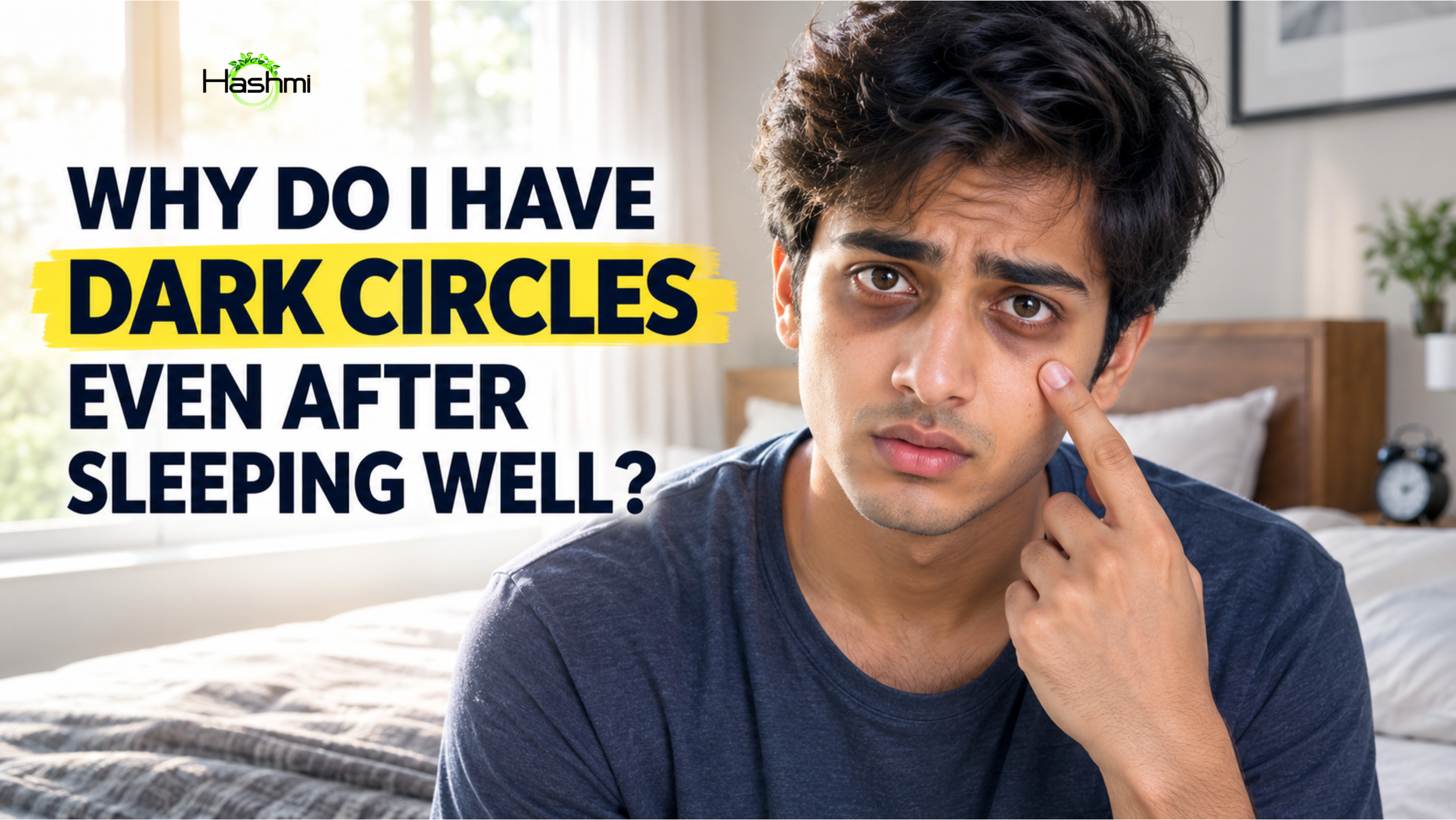
You sleep well, drink enough water, and still wake up with dark circles under your eyes. It can be frustrating when your face looks tired even though you feel rested. The good news is that dark circles are not always caused by poor sleep. Genetics, pigmentation, allergies, aging, sun exposure, and the natural structure of the skin around your eyes can all play a role. Cleveland Clinic
Why Do I Have Dark Circles Despite Enough Sleep?
If you regularly get enough sleep but still have under-eye darkness, the cause may be something other than fatigue.
1. Genetics May Play a Role
Some people naturally have darker skin around their eyes because of inherited characteristics. A family tendency toward dark circles can make them noticeable even when you maintain healthy sleep habits. Cleveland Clinic
2. Skin Pigmentation Can Make Circles Look Darker
Sun exposure and changes in skin pigmentation can contribute to persistent dark circles. Conditions such as post-inflammatory hyperpigmentation and melasma can also make the area under the eyes appear darker, particularly in people with brown or Black skin. Mayo Clinic
3. Allergies Could Be the Reason
Do your eyes itch, water, or feel irritated along with the dark circles? Allergies can cause what are commonly called allergic shiners. Nasal congestion can affect blood flow around the eyes, making the area appear darker. Cleveland Clinic
Frequent eye rubbing can also worsen irritation and make the darkness more noticeable. Mayo Clinic
4. Aging Can Change the Appearance of Your Under-Eyes
As skin becomes thinner and loses some of its structure with age, blood vessels may become more visible. Under-eye hollows can also create shadows that look like dark circles, even when there is little actual pigmentation. Cleveland Clinic
5. Lifestyle Factors Still Matter
Good sleep is important, but it is not the only lifestyle factor that affects the appearance of your under-eye area. Stress, smoking, excessive alcohol consumption, dehydration, and sun exposure can also contribute to darker-looking circles. Cleveland Clinic
How Can You Reduce Dark Circles?
Start with simple habits: protect the skin around your eyes from the sun, avoid rubbing your eyes, stay well hydrated, manage allergies if you have them, and maintain a consistent sleep routine. Sunscreen with broad-spectrum SPF 30 or higher can help protect against pigmentation caused by sun exposure. Mayo Clinic
If dark circles are persistent, a dermatologist can determine whether pigmentation, visible blood vessels, hollowness, allergies, or another factor is responsible.
When Should You See a Doctor?
Dark circles are usually harmless. However, if the darkness or swelling develops under only one eye, especially when it becomes progressively worse, it is worth discussing with a healthcare professional. Mayo Clinic
If you’re unsure what is causing your dark circles, you can also consider a free 1-on-1 health consultation with our healthcare professional to discuss your symptoms and decide whether further evaluation may be appropriate.
FAQs
Can you have dark circles even if you sleep 8 hours?
Yes. Genetics, pigmentation, allergies, aging, sun exposure, and under-eye hollows can cause dark circles even with adequate sleep.
Are dark circles always a sign of a health problem?
No. They are usually related to normal pigmentation, genetics, aging, allergies, or the structure of the skin around the eyes.
Can allergies cause dark circles?
Yes. Nasal allergies can cause allergic shiners, which appear as dark circles beneath the eyes. Cleveland Clinic
Can sunscreen help with dark circles?
Sun protection may help prevent or reduce pigmentation-related darkening around the eyes. Mayo Clinic
SEO Keywords: dark circles even after sleeping well, dark circles under eyes causes, why do I have dark circles, dark circles despite enough sleep, causes of dark circles under eyes, persistent dark circles, under eye pigmentation, how to reduce dark circles