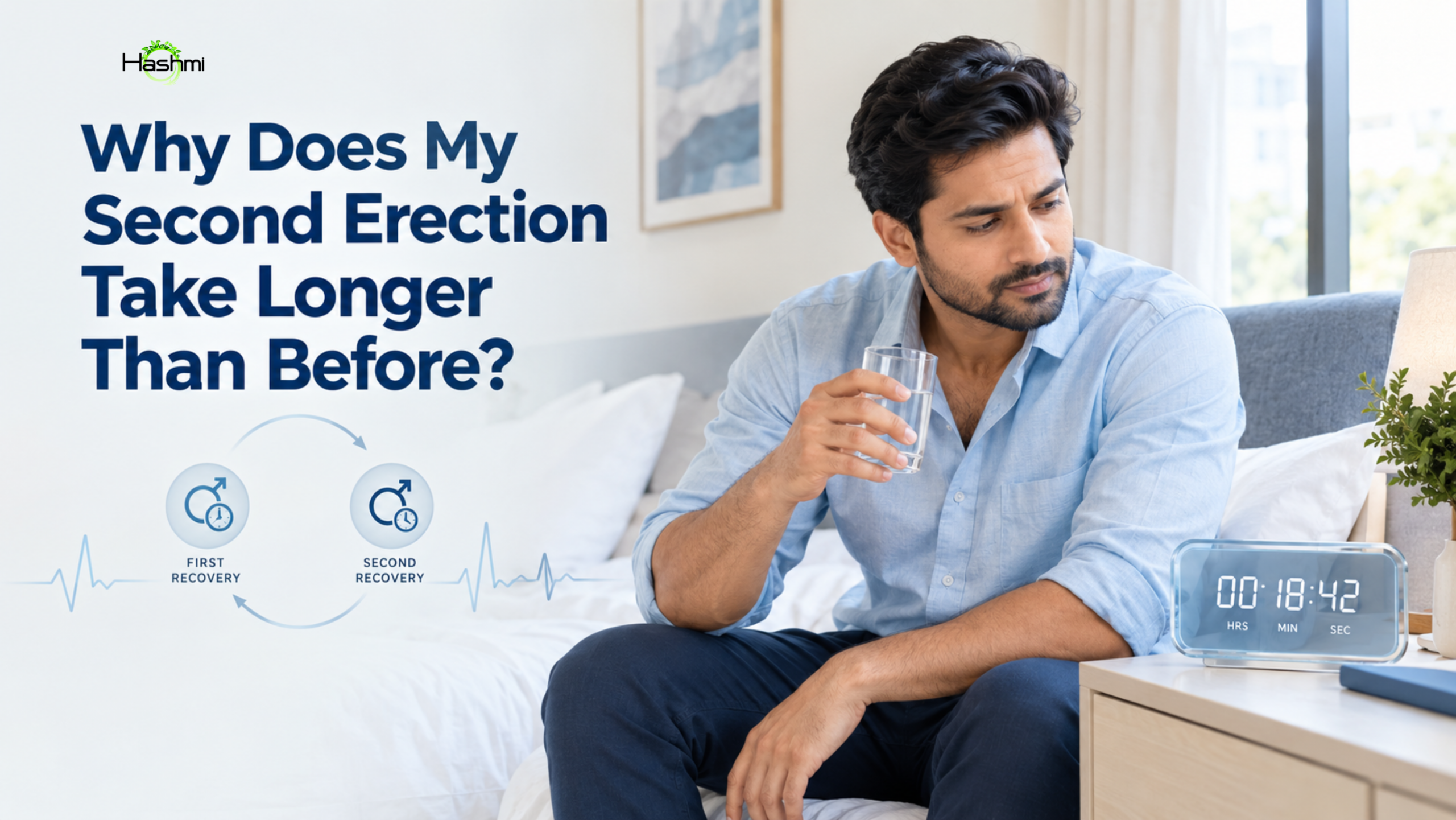
Can you get a first erection easily but find that your body needs more time before a second one? This is common and does not automatically indicate a sexual health problem. After ejaculation, the body enters a natural recovery phase called the refractory period, during which another erection may be difficult to achieve.
Understanding this process can help you recognise what is normal and when to seek medical advice.
1. Understanding the Refractory Period
The refractory period is the time after ejaculation when a man may temporarily be unable to achieve another erection or orgasm. It can last minutes, hours, or longer, depending on the individual. Cleveland Clinic
Recovery time often increases with age, although individual differences are considerable. Taking longer to achieve a second erection is not, by itself, a sign of erectile dysfunction.
2. Common Reasons Your Second Erection Takes Longer
- Age: Changes in sexual response with age can mean needing more time between erections. Cleveland Clinic
- Stress and performance anxiety: Worrying about sexual performance can interfere with arousal and make erections more difficult.
- Poor sleep and fatigue: Tiredness and sleep problems may contribute to erection difficulties.
- Alcohol and smoking: Excessive alcohol consumption and smoking can negatively affect erectile function. NHS
- Underlying health conditions: Diabetes, cardiovascular disease, hormonal problems, and certain medications may affect erections. NIDDK
Several factors can influence erection recovery and overall sexual performance:
These factors do not necessarily explain a longer refractory period in every man. The key is whether you are experiencing a normal recovery phase or a persistent change in your ability to achieve erections.
3. How Can You Support Healthy Erectile Function?
You cannot reliably force your body to recover immediately, but healthy habits can support sexual wellbeing.
- Prioritise sleep: Maintain a consistent sleep schedule and address persistent sleep problems.
- Exercise regularly: Physical activity supports cardiovascular health, which is important for erectile function. National Institute of Diabetes and Digestive and Kidney Diseases (NIDDK)
- Manage stress: Relaxation and open communication with your partner may help reduce performance pressure.
- Limit alcohol and stop smoking: These changes can support better long-term erectile health.
Avoid taking testosterone supplements or erection-enhancing medicines without appropriate medical advice. These treatments are not necessary simply because your second erection takes longer.
4. When Should You See a Doctor?
A longer refractory period is usually not concerning on its own. However, seek medical advice if you regularly struggle to achieve or maintain erections, notice a persistent reduction in sexual desire, or experience other new symptoms.
A healthcare professional may review your medical history, medications, blood pressure, and relevant blood tests to investigate possible causes. NIDDK: Diagnosing Erectile Dysfunction
Need personalised guidance? You can also book a free 1-on-1 sexual health consultation with our healthcare professional to confidentially discuss your symptoms and understand the appropriate next steps.
Final Thoughts
If your second erection takes longer than before, it does not automatically mean something is wrong. Age, fatigue, stress, and individual physiology can influence recovery time. Focus on your overall sexual health rather than forcing your body to achieve a second erection within a specific time.
FAQs
1. Is it normal for a second erection to take hours?
Yes. The refractory period varies from person to person. Cleveland Clinic
2. Does age affect the second erection?
Yes. The recovery period often becomes longer with age. Cleveland Clinic
3. Does a delayed second erection mean ED?
No. It is often normal, but persistent erection problems may need medical evaluation.
4. Can I get a second erection faster?
Not always. Rest, good sleep, and limiting alcohol support overall erectile health.