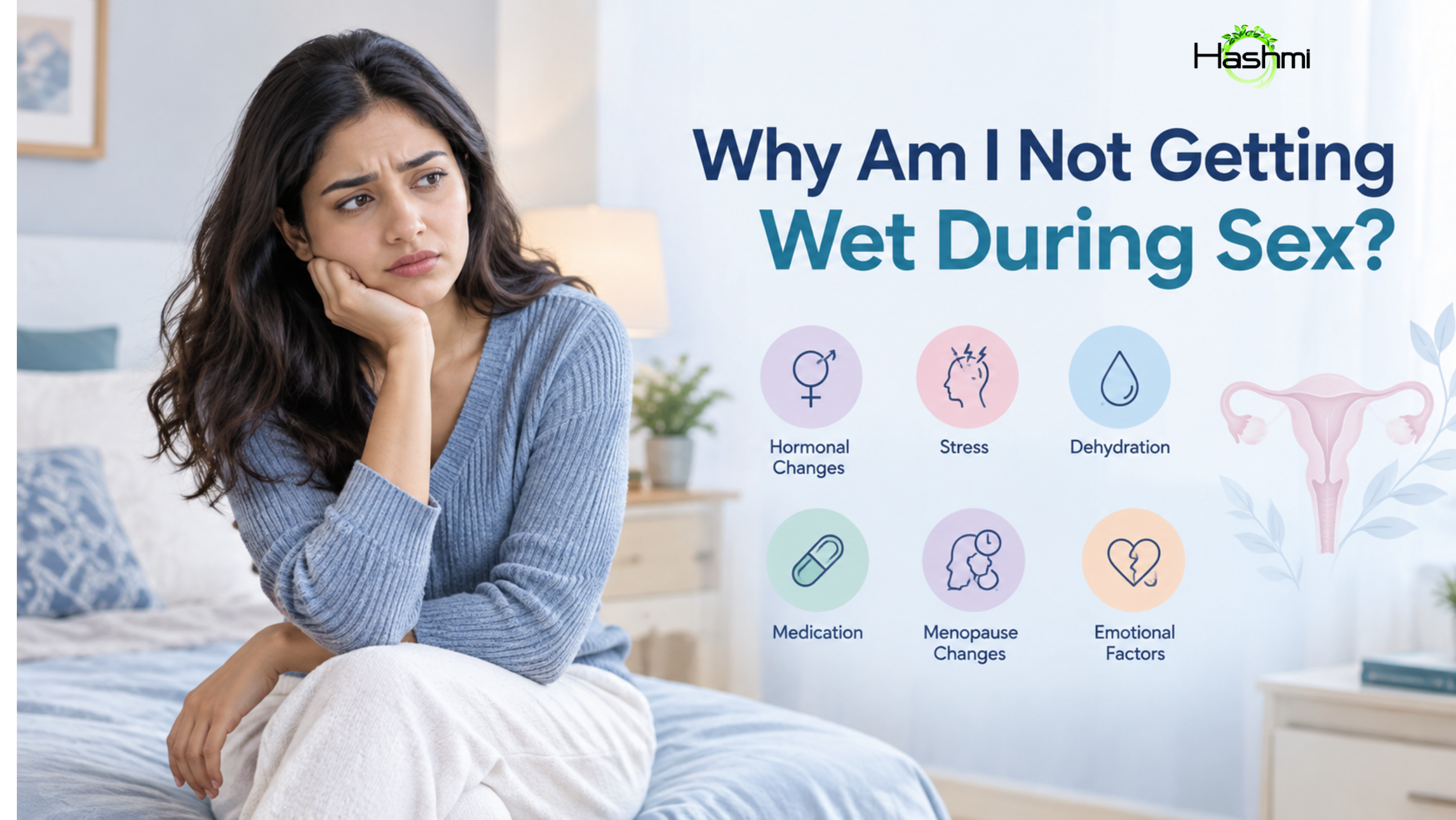
Not getting wet during sex can feel very frustrating, especially when you feel attracted to your partner or genuinely want intimacy. Vaginal dryness does not necessarily mean you are not aroused. Hormones, medications, breastfeeding, stress, menopause and other factors can affect vaginal lubrication. Cleveland Clinic
Why Am I Not Getting Wet During Sex?
1. Hormonal Changes
Changes in estrogen can reduce vaginal moisture. This is particularly common during perimenopause and menopause, when lower estrogen can make vaginal tissues thinner and drier. Office on Women’s Health
Breastfeeding can also be linked with vaginal dryness because hormonal changes can affect vaginal lubrication. Cleveland Clinic
2. Medications and Birth Control
Certain medicines, including some antidepressants and hormonal contraceptives, may contribute to vaginal dryness in some women. National Health Service
If dryness began after starting a medication or contraceptive, speak with a healthcare professional before making any changes.
3. Stress and Anxiety
Stress can contribute to vaginal dryness and may affect your body’s sexual response. Cleveland Clinic
This means you can mentally want intimacy while your body’s physical response does not fully match how you feel.
4. Not Enough Stimulation
Sometimes your body may simply need more time and stimulation before producing enough natural lubrication. The NHS recommends trying different types of foreplay to find what helps you feel more aroused. National Health Service
5. Irritation or Other Health Conditions
Perfumed soaps, vaginal washes and douches can irritate the vaginal area and contribute to dryness or discomfort. National Health Service
Certain health conditions, including diabetes and Sjögren’s syndrome, can also be associated with vaginal dryness. Cleveland Clinic
What Can Help Vaginal Dryness During Sex?
A water-based vaginal lubricant can reduce friction and make sex more comfortable. Vaginal moisturizers may also help with ongoing dryness. Office on Women’s Health
Avoid using perfumed products or creams that are not designed for vaginal use because they may cause irritation. National Health Service
If hormonal changes are responsible, a healthcare professional can discuss treatment options appropriate for your situation.
When Should You See a Doctor?
Talk to a gynecologist or healthcare professional if vaginal dryness lasts for several weeks, keeps returning, affects your sex life, or does not improve with simple measures. Seek medical advice if you also experience pain during sex, unusual discharge, itching, burning, or bleeding after sex. National Health Service
If you’re unsure what may be causing the dryness, you can also consider a free consultation with our health experts to discuss your symptoms privately and understand whether further medical evaluation may be appropriate.
The Bottom Line
Not getting wet during sex does not automatically mean you are not attracted to your partner. Vaginal dryness can have several causes, including hormonal changes, medications, stress, breastfeeding and menopause.
Understanding the underlying cause can help you find an appropriate solution.
FAQ
Why am I not getting wet even though I am aroused?
Mental arousal and physical lubrication do not always occur at the same level. Hormones, medications, stress and other factors can affect vaginal moisture. Cleveland Clinic
Can birth control cause vaginal dryness?
Some hormonal contraceptives may contribute to vaginal dryness in certain women. NHS
Can menopause make it harder to get wet?
Yes. Lower estrogen around menopause can make vaginal tissues thinner and drier and may reduce natural lubrication. Office on Women’s Health
What can I use for vaginal dryness during sex?
Water-based vaginal lubricants can help reduce discomfort and friction during sex. Office on Women’s Health
When should I see a doctor about vaginal dryness?
See a healthcare professional if dryness persists, affects your daily or sexual life, or occurs with pain, unusual discharge, or bleeding. NHS