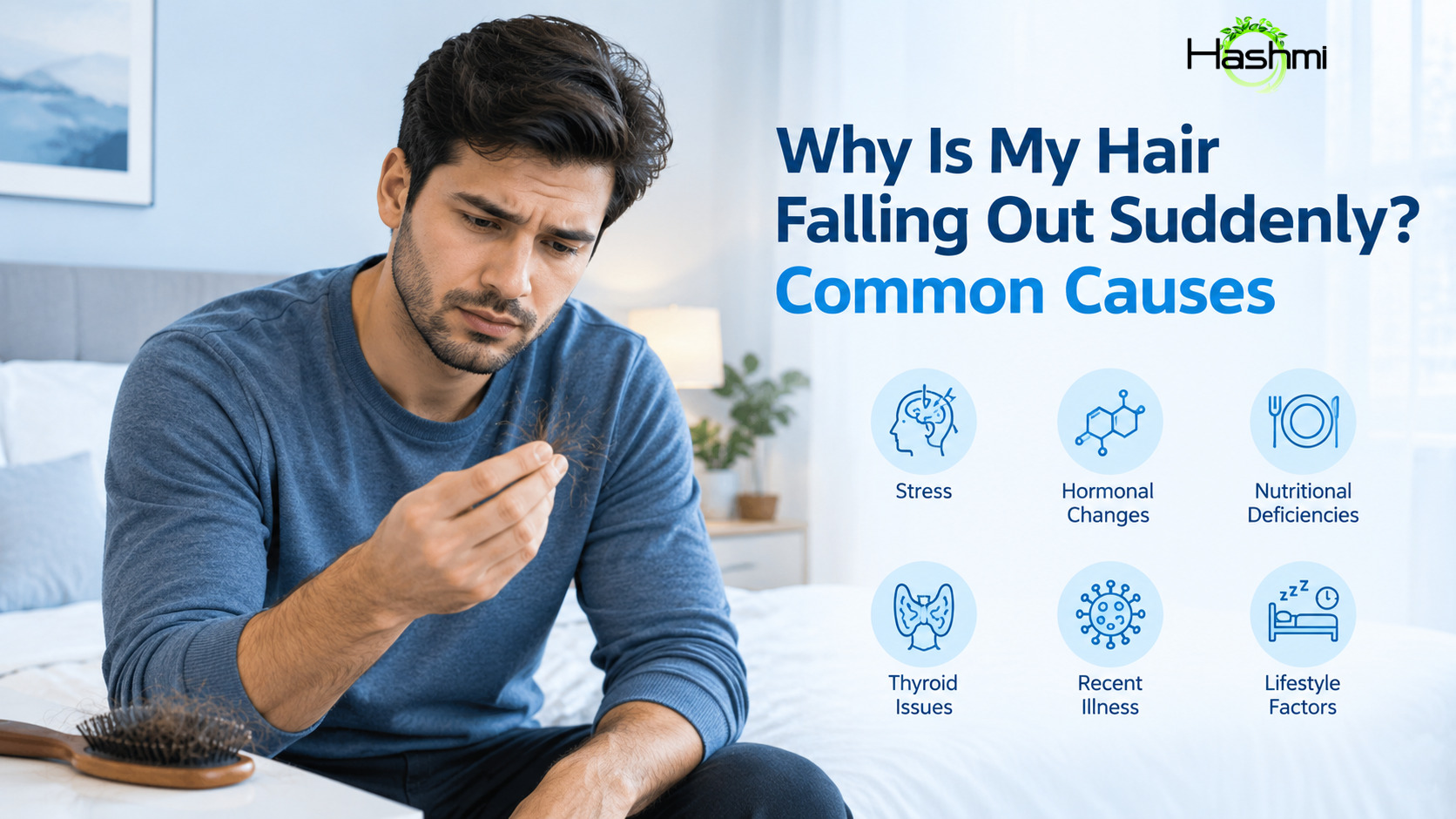
Finding extra hair on your pillow, in the shower, or on your brush can be worrying. While some daily hair shedding is normal, sudden hair loss or noticeably increased shedding can have several causes, from temporary stress to nutritional deficiencies or medical conditions.
Understanding the reason behind your sudden hair loss matters because treatment depends on the underlying cause.
Is Sudden Hair Shedding Normal?
Most people naturally lose around 50 to 100 hairs a day as part of the normal hair-growth cycle. However, noticeably increased shedding, thinning areas, or bald patches may indicate a hair-loss problem. American Academy of Dermatology
If you suddenly notice much more hair falling out than usual, don’t assume that your shampoo or normal hair-care routine is necessarily responsible.
1. Stress or Recent Illness
A common cause of sudden hair shedding is telogen effluvium, which can occur after a notable physical or emotional stress. High fever, illness, surgery, major weight loss, childbirth, and severe stress can trigger increased shedding. American Academy of Dermatology
The shedding may appear months after the triggering event, making the original cause easy to overlook.
2. Nutritional Deficiencies
Hair growth requires sufficient nutrition. Iron deficiency and insufficient protein intake can contribute to hair loss, particularly when the deficiency is significant. American Academy of Dermatology
Restrictive diets and rapid weight loss may therefore affect hair growth. Avoid taking hair supplements blindly; identifying an actual deficiency is more useful.
3. Thyroid Problems
Thyroid disorders can affect hair growth and may cause thinning, increased shedding, or dry and fragile hair. American Academy of Dermatology
If hair loss occurs alongside unusual fatigue, weight changes, or other symptoms, a healthcare professional may consider thyroid testing.
4. Alopecia Areata
Sudden hair loss appearing as round or oval bald patches can be linked with alopecia areata, an autoimmune condition that causes the immune system to attack hair follicles. American Academy of Dermatology
It can affect the scalp, eyebrows, eyelashes, beard, and other areas.
5. Tight Hairstyles and Hair Damage
Repeatedly wearing tight ponytails, buns, braids, or other hairstyles can put excessive tension on hair follicles. Over time, this may cause traction alopecia, a type of hair loss caused by constant pulling or tension on the hair over a long time. American Academy of Dermatology
Reducing tension and avoiding hairstyles that constantly pull on the same areas can help prevent further damage.
When Should You See a Doctor?
Consider seeking professional advice if hair loss is sudden, severe, persistent, or accompanied by bald patches, scalp irritation, pain, redness, or scaling. American Academy of Dermatology
A dermatologist or qualified healthcare professional can examine your scalp and, when appropriate, recommend tests to investigate nutritional, hormonal, infectious, or other causes. American Academy of Dermatology
If you’re concerned about sudden hair shedding or unexplained hair thinning, you can also consider a 1-on-1 free consultation with our expert to discuss your symptoms and understand what may need further evaluation. A consultation can help you decide whether professional assessment or testing is appropriate for your situation.
Frequently Asked Questions
How much hair loss is normal per day?
Losing around 50 to 100 hairs daily can be normal. A noticeable increase in shedding may require further evaluation.
Can stress cause sudden hair loss?
Yes. Significant physical or emotional stress can trigger temporary increased hair shedding, sometimes appearing several months after the stressful event.
Can vitamin deficiency cause hair loss?
Certain nutritional deficiencies, particularly iron deficiency, can contribute to hair loss. Testing can help determine whether a deficiency is actually present.
Is sudden hair loss always permanent?
No. Some causes of sudden shedding are temporary and may improve once the underlying trigger is addressed. Persistent or patchy hair loss should be evaluated.
The Bottom Line
Sudden hair loss doesn’t always mean permanent baldness. Stress, illness, nutritional deficiencies, thyroid problems, autoimmune conditions, and repeated hair tension can all contribute to hair shedding or loss. Identifying the underlying cause is more useful than simply treating the hair itself.